Showing posts with label optimism. Show all posts

Wednesday, November 27, 2013

Caring For Alberta’s Foster Kids–Room For Praise & Scorn

The trouble with most of us is that we would rather be ruined by praise than saved by criticism. - Norman Vincent Peale

There has been quite a buzz in Alberta these days regarding recent reports of 145 children who died while in the care of the Alberta Government between 1999 and 2013.  To quote this article in the Edmonton Journal:

Of the 145 children who died in the care of the Alberta government between 1999 and 2013, 53 cases merited a public fatality inquiry or a documented in-depth internal review. When those reviews issued recommendations to prevent future deaths, there was no system in place to track them, or to ensure they were implemented.

Now in fairness to the Alberta Government and to all the agencies involved with this story, taking care of children, especially those who have lived difficult lives, has many complexities including but not limited to:

- the creation of effective programs to help these kids and their families

- the coordination of the many groups that work together to help everyone in need

- the addressing of child and family needs that are often specific to each individual

- finding budgets for such programs in fiscally difficult times

- the protection of the the privacy of the families and children who are involved.

And let me be clear …

THERE ARE MANY HEROES IN THE SYSTEM WHO LOOK AFTER THE CHILDREN THAT SOCIETY MAY APPEAR TO HAVE TURNED ITS BACK ON.

However ……..

I believe that the press conference that Minister Hancock held this morning was a tremendous strategic communication mistake.

Here’s why.

I got the feeling as I listened to the press conference that there was an attempt to claim the title of who was the greater victim – the children or the people who help them.

Some quotes:

[Reporting of these problems] "should not be allowed" – Katherine Jones – Alberta Foster Parent Association

“While it [the story] is true, it is hurtful” - Danica Frazer - Alberta Association of Services for Children and Families Executive

“We don't need to traumatize everyone working in the system” - George Ghitan – Hull Services

The Minister also noted several times that the focus of the media should be on hope and the great results produced and not on the problems that have surfaced.

Where does the media fit into all of this?

The media has been hungry to dig into this story but to be honest, this is what they do for a living.  When they do it for a cause we agree with, we think they are heroes.  When they do it for something we would rather hide, they are villains.

It’s all perspective.

Regardless of the bad news that has surfaced, it is true that the system has thousands of people doing great things for children who really need help and there are many success stories in the system.

Everyone who participates, either offering or receiving help, is a hero in my mind.

But people must never be afraid to embrace the criticism that comes their way or to deflect the criticism by suggesting that they are the victim instead of the real victims … the children and their families.

We must also never get side-tracked from fixing injustices in the world just because someone suggests that to focus on such problems is pessimistic. 

Correcting problems is not the role of a pessimist.

It is the role of an optimist.

Such optimists are also realists since they believe they can make the world a better place by acknowledging and tackling the problems as opposed to the pessimists who throw up their hands and give up or the people who would rather pretend the world has no problems.

And besides, most of us have learned that our greatest growth has come when we tackled our problems directly rather than pretend that they are not there or that they are someone else’s fault or responsibility.

I think now is the time for the heroes in our system (front line workers and the Government) to show us how they are going to make the system better instead of implying in official press conferences that there is a fight to claim the title of “greatest victim”. 

We already know who the real victims are.

What do you think?

In service and servanthood,

Harry

Addendum

Much has been made of this cartoon:
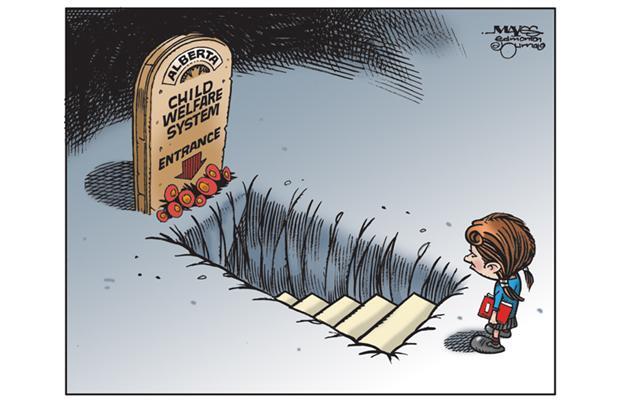
I’m sure that it has offended many, including Minister Hancock.

But like many things, expressing an opinion as this artist did has a way of applying a cranial defibrillator that we can claim to be offended or hurt by when we should be using our aroused energy to actually find a solution to the problem at-hand.

Tuesday, August 27, 2013

The Fatal Flaw in Out of Sight, Out of Mind

I think the greatest illusion we have is that denial protects us. It's actually the biggest distortion and lie. In fact, staying asleep is what's killing us – Eve Ensler

My blog yesterday, Morals - Setting the Bar Lower, had two images that some people found offensive.

I knew it would – that’s why I used them. :-)

The funny thing with both images, one being of Miley Cyrus in her over-the-top actions at the VMAs on Sunday and one being from an HBO special from last year, was that they were front and center in the media and so people had to have experienced them before.

That’s what I thought, at least.

I asked one person who wrote to me about what he found offensive about the images and his answer really struck me.

Here it is:

Dear Mr. Tucker,

I know that such things exist in the world.

However, seeing the images on your blog remind me of them.  When I don’t see images like this, I don’t have to think about those things in the world.

It is the same reason I don’t watch the news.  I find that when I don’t hear about the problems in the world, I can pretend they are not there and remain optimistic about our future.

Thank you for asking for my opinion so respectfully.

<<name removed>>

While I respect this person’s opinion, it reminded me of a blog I wrote back in 2010, Is Optimism Killing Us?, where I mused:

But until we acknowledge that oftentimes there really are difficult and challenging obstacles that must be overcome first, we will still be smiling with the deer-in-the-headlights look when the thing we pretended wasn’t there runs right over us, whether it be a personal failure, a corporate blunder or a government collapse.

…….

Sometimes the light at the end of the tunnel may actually be a train.  If I deny it’s a train, it will run right over me.

But if I acknowledge it is a train, then I can work to solve the problem and convert the light at the end of the tunnel into a ray of hope.

It also reminded me of this blog that I wrote in 2011, Strategy 101: What Are Your Objectives?, where I noted this method of dealing with reality:

We can wait and hope that the right solution magically appears.

However, if that is the strategy, I fear we will run out of time long before that happens.

The oil light on the dashboard of our planet has just illuminated.  That’s ok – we can cover it up with a piece of tape.

Meanwhile, the low gas light has just illuminated.  No problem – wherever we travel, we need to make sure we are going downhill with a strong tailwind to help keep us going.

Ah, but now the brakes are squealing really loudly.  That’s why we have a radio – we just turn it up and the problem disappears.

Sounds pretty simple, doesn’t it?

Unfortunately being reactive while avoiding reality is not going to get us where we need to go much longer, despite our intention to pretend otherwise.

The ostrich that chooses to stick its head in the sand instead of dealing with the situation at hand ends up being highlighted on websites like this – in the cooking section of the American Ostrich Association.

If we don’t choose to deal with reality, whether it is the project deadline that is impossible, the team member that is tearing our project apart, facing public opinion regarding a difficult choice, a personal relationship that is sinking us or whatever the issue we is, then at some point that reality will deal with us.

Unfortunately, the situation will be resolved on its / their terms and not ours.

Pain deferred so that we can deal with things later (or not at all) often becomes pain amplified.

And while it is easy (and human nature) to defer facing the pain until you are forced to, wouldn’t it be better to deal with it now while the terms and results are still potentially within your control?

So … in that case, what are you waiting for?

In service and servanthood,

Harry

Addendum

Here is an example of how “out of sight, out of mind” can be fatal.

A report that was released with little fanfare and little media attention a couple of weeks ago indicated that many U.S. nuclear power and research facilities are vulnerable to terrorist attack.

While some facilities are vulnerable to classic terrorist attacks, some are vulnerable to attack by weapons legally available to the average US citizen.

Most disturbing of all, the report also describes examples of infiltration, such as one where an American citizen, suspected of al Qaeda membership, worked for five different US nuclear power
plants from 2002 to 2008 after passing federal background checks.

Acknowledging that such exposure exists, while frightening, is the first step to addressing it.

Monday, August 19, 2013

The 13th Principle of Overcoming Adversity

Last week, I wrote about The 12 Principles of Overcoming Adversity and was overwhelmed by the email responses to it.

While I haven’t gotten through the many emails I have received, a significant percentage of respondents had a question in common that I would paraphrase as follows:

After years of a good, great or successful Life, these things are hard to believe in when Life suddenly seems to get stuck.  Why is this and what should I do about it?

I remember reflecting upon this in my Life when I wondered why things suddenly seemed to stop moving and then I came across something that answered the question for me.

Of the many times I have made presentations, there were a couple of times when the coordinators of the events checked out my background (which is not unusual).

However, what was interesting was that when I arrived they were startled to see that I was perhaps 20+ years younger than they expected.  Each time, the coordinators made comments along the lines of expecting someone much older and how I had obviously compressed a lot of living into my Life.

And so when I became “stuck”, I wondered why someone with so much “success” had suddenly “paused”.

That was when I came across this quote by John O’Donohue which contains a hint to the 13th Principle of Overcoming Adversity:

“Many people who are secretly weary of work have never taken themselves time, or taken time out or away from work, to allow their spirits to catch up”.

<substitute any word for “work”, depending on your own circumstances>

This statement was a punch between the eyes for me.

While my early Life was a whirlwind of success by many people’s standards, I never slowed down to ask questions like:

What does this mean?

What can I do with this ?

Where do I want to take this?

And I never slowed down to express what might have been a better expression of gratitude.

As T.S Eliot wrote in “Four Quartets”:

“We had the experience but missed the meaning”

With that realization, it occurred to me that my “pause” was the Universe / God’s way of saying “You must understand the lessons from your Life up to now in order to proceed”.

And while many of my professional projects have checkpoints to determine how the project should continue, I had missed this principle when it came to my personal Life and how it should continue.

So to those who feel stuck, perhaps the downtime is actually not the negative event that you perceive it to be but is in fact breathing room - a pause to provide your mind and soul with an opportunity to catch up to where you are physically.

This pause can be a double-edged sword.

You can dwell upon the “pause”, increasing your frustration level and tearing yourself apart to figure out why your Life has taken an unwanted detour.

Or you can say thank you for the downtime, take the time to learn the lessons from your past, express gratitude for those lessons and then decide what your next adventure looks like.  While a sense of urgency may tell you that it is insane to roll with this pause, it has been my experience and the experience of many I have spoken to that if you fight the pause, the resistance gets greater.

However, that does not mean that you stop taking action altogether.

I would compare this experience to getting caught in a riptide (which I have personally experienced).  You don’t swim against the riptide since eventually you will become exhausted and drown, fighting against a force much stronger than you are.

And if you stop swimming altogether, you drown also.

However, if you swim parallel to the shore, you eventually swim free of the force that threatens to drag you out to sea and you can make it safely to shore ….. ready to resume the Journey that is your Life.

And so to those who expressed frustration or anxiety over being stuck, I offer this.

The next adventure in your Life might be new success on the existing Path of Life or it might involve embarking upon a whole new Path.

In order to continue on the Journey, the knowledge from one’s past must be understood and appreciated without fighting the process required to accomplish this.  In order to reach this understanding, the desired execution of your Life sometimes needs to take a breather while your soul / mind / sense of understanding catch up to where you are.

Life is calling you to swim parallel to the shore for a little bit instead of swimming against the tide.

Be grateful for that opportunity, embrace it and take advantage of it.

The next step of your Journey requires it and won’t happen or will be delayed until you have learned the lessons required to set out again upon the Path.

And therein lies the secret of the 13th Principle and what you are called to do with it for yourself and others once you discover it. 

In service and servanthood,

Harry

Thursday, August 15, 2013

The 12 Principles of Overcoming Adversity

I have been blessed and honored by many people who reach out to me when they are experiencing personal or professional difficulties. 

There is also a running joke amongst some of my friends who know how many times I have been stopped in the streets of New York and elsewhere by complete strangers who, needing help, walked up to me and opened a conversation with a line similar to “Excuse me, Reverend ……”.

The one thing that I prefer to share with people who ask for help are personal stories that I have lived, to help give others context that “I know your pain and this is how I know”.  I’m not merely spouting clichés or repeating something I just read and people are often simultaneously startled and appreciative of my transparency.

A few of those stories came to mind the other day as I was reviewing some items in my journal.  With that in mind, I thought I would share my top twelve favorite principles that I share with others when asked for help.

Here they are, in no particular order and not representing an exhaustive list.

The 12 Principles

1. Be patient with everyone and everything, especially yourself.  Not everything can be directed exactly as we want it and exactly when we want it to be.  There will be moments of weakness.  You are not human if you don’t know what I am referring to.

2. Remember to express gratitude for the small things around you.  If you can’t be grateful for the small stuff, why should you be entrusted with bigger things?

3. Have faith that things will work out, because they always do, often despite our best efforts to the contrary.

4. Remember the importance of the universal laws that “you must ask to receive” and that “you must answer the door when opportunity knocks – opportunity doesn’t kick it down for you and drag you out kicking and screaming”.

5. It is critical to follow your bliss and not bend to someone else’s, personally or professionally.

6. Miracles come from unexpected sources when least expected and often at the last minute.  Even to atheists and agnostics. :-)

7. Perseverance sometimes requires you to do nothing.  Doing nothing is sometimes equally as important as doing something.  Silence matters.

8. My corollary to the previous point.  We should take action when we can, even if all we can muster is not as much as we would like.  Action matters – perfection is not always required.

9. There is always a lot of love around us but we need to be open to receiving it and the help that often accompanies it.

10. The world doesn’t owe you a damn thing but it sure has a lot to offer if you want to step up, assert your value / worthiness and take it.  If you don’t, someone else will.

11. Lessons, no matter how painful, repeat at difficult or inconvenient times until we “get it”, often with an ever-increasing frequency and sense of urgency (or sense of “pain”).

I wish I could identify the easiest or most difficult one to learn or which one was most important but I cannot since different combinations were woven together at different times.  However, if I were to pick the one that seemed most common in my own Life, it is #11. :-)

Ah yes, I promised twelve reasons.

Here is the twelfth.

12. In your uniqueness, there will be lessons learned that are unique to you.  Treasure them and share them with others when you can.  In our difficult times comes our greatest learning opportunities – about Life, about others and about ourselves. You will look back on the difficult times with a sense of gratitude at some point.

I wrote this blog with one person in mind – that person knows who they are.

To others, I would like to offer this long distance dedication.

I dedicate this musing to the people who helped me to learn these lessons (way too many to name here), to the people who are learning their lessons now and to those who have not yet been “blessed” with the opportunity to do so but who will probably be forced to at some point in their Life.

Take care and create a great day for yourself and others, because merely having one is too passive an experience.

In service and servanthood,

“Reverend” Harry :-)

Addendum – August 16, 2013

For those who are exploring where they are on their journey, the book “Anam Cara: A Book of Celtic Wisdom” by John O’Donohue is a HIGHLY recommended read.  Please have a highlighter handy – you will need it.

Addendum – August 18, 2013

After a heavy response to this blog, I felt compelled to muse about The 13th Principle of Overcoming Adversity.

Sunday, June 24, 2012

When Yelling “Fire!” Is Of Little Value

I’m having a moment this morning where I feeling like yelling “Fire!”.

As I review my briefings for the past week and for the upcoming weeks for my Wall St., government and military clients and contacts, I don’t like where the data points are trending.

I layer on ongoing scandals in institutions like the Roman Catholic Church and other organized churches, the massive failure of the Rio+20 Summit, the disguised intentions of many in the “green” space, the inadequacies in the UN as demonstrated by the Syrian disaster and how solvable problems such as world hunger and disease continue to run rampant and I think that if Jesus / the Buddha / the aliens / “whoever you are waiting for” are going to arrive, now is a good time.

I’m ordinarily an optimist who encourages others to see the glass as half full but today as I reflect on the data points that are trending in the wrong direction, I must admit that pretending all is well in the world is not helping solve our most pressing problems.  Promoting successes while ignoring failures or pretending they are not there is also not working very well.

Don’t get me wrong.  There is MUCH beauty and potential in the world and we must champion and promote such things.

However, the number of things that need to be fixed is growing rapidly and with ever-increasing significance and impact.  We need to grasp this and do something about them while they are within our ability to do so.

The people in power who make decisions on our behalf every day know this but don’t know how to share it for fear of creating a panic that will grip the world and make things worse.

“Fire!”

Trying to educate people whose brains are already being painfully squeezed is like yelling “Fire!” in a burning theater.

In such a situation, the weak-minded will instantly have a mental meltdown or a heart attack and add to the problem.

The uber optimists will get angry with the alarm and will say that pointing out the existence of a fire is too pessimistic and should be ignored.

The people without a plan will trample each other to death while randomly or aggressively searching for an exit. 

The people who think they know it all will be indignant that a good movie is being interrupted and will immediately discredit the person yelling “fire!”.

The people who see opportunity to benefit from the disaster will sell useless products or ideas that won’t prevent the deaths of anyone in the theater but the theater-goers will feel better about their situation until the end comes.

Some people in the theater will decide that now is the right time to insist that the REAL issue at hand is the need for cheaper or more comfortable seats or that they should be able to demand that the seats be in their favorite color.

The politicians in the theater will insist as smoke fills the room that not only is there no fire but if people stick it out for the second movie of a double feature, there will be free popcorn for everyone. 

Meanwhile they go borrow some popcorn from the theater down the street, ask everyone in the burning theater to give back their popcorn so that it can be returned to them as free popcorn later or have their military beat up the people in the next theater and steal their popcorn. 

Between the two movies, they will deliver the message that if there was a real fire (which they assure everyone does not exist), it is the fault of someone else.

The media covering the event will over-analyze it, comparing it to past fires while offering nothing of value for preventing future events of a similar nature.  They will also reiterate the need to feel afraid for no reason in particular while not offering ideas to protect one’s self or enhance theater safety moving forward.

So yelling “Fire!” serves no function.

However, as I finish reading my briefs for the week, I am moving quietly but steadily towards the exit.

I am still very optimistic about our future.

But being an optimist often means we have to be realistic about what is happening around us and to take appropriate action in order to bring our optimism and the realism of our situation into alignment so that we can manifest our unlimited positive potential.

As for the people left behind in the “burning theater”, many times we have to acknowledge that we can’t save everybody.

If we get caught up attempting to save those who can’t or won’t be saved, we all go down together.

Such an approach is not being pessimistic or evil.

It’s being an optimistic realist (or a realistic optimist).

We need more of this outlook to create the world that we are capable of creating, saving that which is worth saving and that which contributes to a better, stronger world.

The Universe is not an optimistic system.  It is a realistic one with a mix of good and bad - beautiful things and ugly things.

Sometimes evil wins over good despite our best hopes, intentions and efforts.  After all, evil and good are often just perspectives, something many of us don’t like to admit.

With that in mind, those who live in the Universe need to make sure that their optimism is tempered with appropriate levels of realism if they are to live as productive a Life as possible.

And so while we should enjoy the beauty of Life, we must know how to react appropriately when someone yells “Fire!”, or better yet, take proactive action by seeing the potential for fire before the cry for help goes out.

What do you think?

In service and servanthood,

Harry

PS There is a great TED talk presented by Tali Sharot about the danger of unrealistic optimism, found here.

Thursday, August 26, 2010

Is Optimism Killing Us?

I’ve noticed an interesting trend lately in many circles, especially in the corporate and government worlds.

If you point out a problem or even acknowledge that a problem exists, then you are a pessimist.

Meanwhile, the things we want to pretend aren’t happening continue to grow in frequency and intensity.

Here are a few examples:

1. Climate change (regardless of the reason).

2. The government and personal credit crisis that is about to explode with as-yet unknown results.

3. Economies built upon ever-increasing spending (that elementary school mathematics can prove is unsustainable).

4. People in developing nations who don’t have access to basic services, including clean water and basic medicine.

5. Corporations executing with questionable or non-existent strategies.

Equally insidious are the people who are trying to convince their management, peers and minions that everything is under control so people shouldn’t ask questions.

When people like me come along, insatiably curious about everything, we are a threat to their peace of mind.  After all, people who don’t accept with blind faith that everything is perfectly under control are a danger to the myth they are trying to impart upon others and a threat to their ego.

That being said, optimism and hope are critical attributes to have.  Without them, it is easy to feel overwhelmed, that we have no chance of surviving that which we are facing.  If we feel overwhelmed, we give up hope and lie down in defeat.

We must always have hope that great, wonderful things are before us.

But until we acknowledge that oftentimes there really are difficult and challenging obstacles that must be overcome first, we will still be smiling with the deer-in-the-headlights look when the thing we pretended wasn’t there runs right over us, whether it be a personal failure, a corporate blunder or a government collapse.

Being a pessimist is not productive on many levels and can be extremely crippling to you and those around you.

Being an uber-optimist is not much better.

I think it is better to be a realist with an optimistic outlook – that it is ok to acknowledge that we have challenges before us but that through intelligent, proactive action, we will overcome it together.

Sometimes the light at the end of the tunnel may actually be a train.  If I deny it’s a train, it will run right over me.

But if I acknowledge it is a train, then I can work to solve the problem and convert the light at the end of the tunnel into a ray of hope.

And that is where optimism and positive thinking work best – as the fuel to help us believe that we WILL overcome our challenges …..

…. whatever they are ……

…. together.

In service and servanthood.

Harry

For my Musings-in-a-Minute version of “Is Optimism Killing Us"?”, please click here.